
Dating Women From Yekaterinburg: The Urals City and the Women Who Come From It
Yekaterinburg sits in the middle of Russia in the most literal possible sense — it straddles the geographic boundary between Europe and Asia, marked by an obelisk on the city’s outskirts that tourists photograph and locals regard with affectionate bemusement. Founded in 1723 by Peter the Great as an industrial centre for the Ural Mountains’ mineral wealth, it has been Russia’s fourth-largest city for most of its modern history and has always had a character distinct from the capitals: more practical, more self-reliant, less interested in impressing anyone, and more focused on actually getting things done.
What Yekaterinburg Is and What It Is Not
Yekaterinburg is not a glamorous city in the Moscow sense. It does not have the imperial grandeur of St. Petersburg or the frantic commercial energy of the capital. What it has instead is a specific kind of Urals directness — a no-nonsense, capable, self-sufficient character that reflects a city that has always had to produce things rather than simply manage them. The city was a major industrial centre during Soviet industrialization, a closed military-industrial complex during the Cold War, and has reinvented itself since 1991 as one of Russia’s significant business and cultural centres, hosting major international events and developing a cultural scene that its size and distance from the capitals sometimes make surprising to outsiders.
The city also carries specific historical weight. It was here, in the Ipatiev House, that Nicholas II and his family were executed in July 1918 — the Church on the Blood now stands on that site and is a significant place of pilgrimage for Russian Orthodox Christians. The complicated feelings that Yekaterinburg Russians have about this history are worth being aware of rather than treating as a simple narrative.
The Character of Women From Yekaterinburg
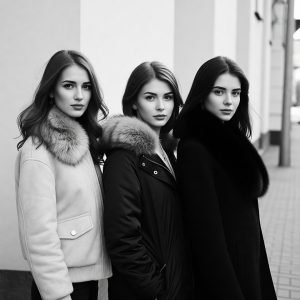
Women from Yekaterinburg tend to be direct, practical, and self-sufficient in ways that the city’s character naturally produces. The pretension and status-consciousness that characterizes some Moscow social culture tends to be largely absent — Yekaterinburg women are more likely to judge a person by what they actually do and how they actually behave than by the external markers of success that matter more in the capital. This makes initial social contact somewhat more straightforward than in Moscow, where navigating social hierarchies can be its own challenge.
Education levels are high — Ural Federal University is one of Russia’s significant institutions, with strong traditions in engineering, technical sciences, economics, and the humanities — and Yekaterinburg women are well-represented in professional fields across the spectrum. The city’s location as a commercial hub for the broader Urals and Siberian region means that women from professional backgrounds there tend to be practically capable and economically independent in ways that come naturally rather than being performed.
Relationships and What Actually Works
The directness of Yekaterinburg’s social culture extends into how relationships work there. Women from the city tend to say what they mean, expect the same in return, and have limited patience for deliberate ambiguity about intentions. If you are serious, say so; if you are not, say that too. Clarity is respected in a way that may require adjustment from Western men accustomed to longer periods of social ambiguity before commitment becomes a topic.
Family matters in Yekaterinburg as it does across Russia, but the specific flavour of family involvement here tends to be practical rather than ceremonial — less about formal introductions as milestones and more about genuine integration into each other’s actual lives over time. The warmth, once established, tends to be real and lasting rather than performed.
Practical Guidance for Western Men
A few things that matter practically for anyone dating women from Yekaterinburg. The city’s distance from Moscow and its self-reliant character mean that women from there tend to be genuinely independent in ways that require a partner who matches that energy rather than trying to manage or provide for them in traditional terms. Showing genuine curiosity about what it is actually like to live in the Urals — the specific landscape, the specific cultural character, the specific history of a city that was closed to outsiders for much of the Soviet peri
od — tends to open conversations that reveal a great deal about a person’s actual experience of the place.
The Urals’ position as the geographic boundary between Europe and Asia is something Yekaterinburg residents are aware of and occasionally reflect on — the city sees itself as occupying a specific liminal position in Russian geography and identity that most Russian cities do not share. Engaging with this dimension of the city’s self-understanding, rather than treating it as a geographical triv
ia fact, tends to communicate the kind of genuine interest in the specific place that women from genuinely specific places tend to value.
The Bottom Line
Yekaterinburg produces women who are direct, capable, and grounded in ways that the city’s specific character naturally generates. Engaging with the city on its own terms — its history, its specific Urals character, its position at the European-Asian boundary — communicates genuine interest in a place that is accustomed to being overlooked in favour of the capitals, and that tends to be noticed and appreciated accordingly.