

Albanian Woman
Albania is one of the Balkans’ more genuinely surprising countries — small, dramatically scenic, and carrying a history that most outsiders know almost nothing about despite its considerable weight. It spent decades as the most isolated country in Europe under Enver Hoxha’s communist regime, which banned religion, private property, and contact with the outside world in ways that had no parallel elsewhere on the continent. What emerged from that isolation in 1991 was a society with remarkable resilience, a fierce attachment to specific cultural values that survived despite — or perhaps because of — the pressure to abandon them, and women who combine intellectual seriousness, strong family orientation, and a directness that reflects a culture where keeping your word is considered a fundamental moral obligation rather than a social convention. Understanding that combination is the most useful starting point for anyone interested in a relationship with an Albanian woman.

Geography, Cities, and Regional Character
Albania is a small country on the western edge of the Balkans, bordered by Montenegro to the north, Kosovo to the northeast, North Macedonia to the east, and Greece to the south, with the Adriatic Sea to the west and the Ionian Sea to the southwest. The geography is dominated by mountains — the Albanian Alps in the north are among the most dramatic landscapes in the Balkans — with a narrow coastal plain running along the Adriatic and Ionian shores. The contrast between the rugged northern highlands, where traditional clan culture has been strongest historically, and the more Mediterranean south is genuinely significant in terms of social norms and values.
Tirana, the capital, has transformed dramatically since the fall of communism — from a grey, monolithic Soviet-style city to a place with genuine urban energy, colorful architecture, a growing café and restaurant culture, and a young population that is increasingly internationally connected. It is a city in the process of becoming something, and that energy is part of what makes it interesting. Women from Tirana tend to be well-educated, multilingual, and oriented toward careers in fields that have expanded rapidly since the 1990s — law, business, technology, medicine, and media. Shkodër, in the north, is Albania’s fourth-largest city and a centre of the northern Albanian Catholic community, with a distinct cultural character shaped by its position near the Montenegrin border and its role as a historic centre of Albanian literary and cultural life. Durrës, on the Adriatic coast, is Albania’s main port and second city, with Roman and Byzantine ruins that reflect the depth of the territory’s ancient history. Gjirokastër, in the south, is a UNESCO World Heritage site — an Ottoman-era stone city built on a steep hillside above the Drino valley, and the birthplace of both Enver Hoxha and Ismail Kadare, Albania’s most internationally recognized novelist.
History, Besa, and What Shaped Albanian Values
Albanian history has several layers worth understanding. The Illyrian tribes of antiquity, Roman conquest, Byzantine rule, and the medieval Albanian principalities all preceded the Ottoman conquest of the fifteenth century, which lasted until 1912. The resistance of Gjergj Kastrioti — known as Skanderbeg — to Ottoman expansion in the mid-fifteenth century is the central narrative of Albanian national heroism, celebrated with genuine fervor rather than historical formality. Ottoman rule brought Islam to much of the country, though Albania’s religious landscape has always been unusually mixed — Muslim majority, significant Orthodox and Catholic minorities — and the communist regime’s 1967 declaration of Albania as the world’s first atheist state, banning all religious practice on pain of imprisonment, paradoxically produced a country where religion today is worn relatively lightly and inter-religious coexistence is genuinely normalized rather than politically managed.
The communist period under Hoxha from 1944 to 1985 was extreme even by Eastern Bloc standards. Albania broke with the Soviet Union in 1961, with China in 1978, and eventually cut itself off from virtually all outside contact — building over 170,000 concrete bunkers across the country as preparation for the invasion that never came, collectivizing agriculture, banning private vehicles, and imprisoning or executing tens of thousands of political opponents. The transition from this isolation beginning in 1991 was correspondingly difficult, including a near-complete state collapse following the pyramid scheme crisis of 1996-97. This history produced a specific kind of resilience in Albanian society — a capacity to endure and adapt under pressure — that remains visible in how Albanians approach both practical challenges and personal relationships.
The concept of Besa is the most important single thing to understand about Albanian values. Translated literally as “keeping your word” or “faith,” Besa is a foundational principle of Albanian customary law — the Kanun — that encompasses honor, hospitality, and the absolute obligation to fulfill a promise once made. Its most dramatic historical expression was the sheltering of Jewish refugees during World War II by Albanian families who considered it their obligation under Besa to protect guests who had sought their protection, regardless of personal risk. Albania is one of the few European countries with a larger Jewish population after the war than before it. Understanding Besa as a living value rather than a historical curiosity is essential for understanding what Albanian women mean when they say they value honesty and commitment — these are not abstract preferences but expressions of a deeply rooted cultural ethic.
Culture, Religion, and Daily Life
Albanian culture’s religious complexity deserves specific attention. The country is approximately 56% Muslim, 17% Catholic, and 7% Orthodox Christian, with a significant portion identifying as non-religious — numbers that reflect the specific legacy of communist atheism. What is more culturally significant is that inter-religious tolerance in Albania is genuine rather than imposed — marriages across religious lines are common, and the phrase “the religion of Albanians is Albanianism” (attributed to the nineteenth-century poet Pashko Vasa) captures something real about how national identity takes precedence over religious identity in Albanian culture.
Albanian cuisine reflects the country’s Mediterranean position and Ottoman heritage — qofte (grilled meat patties), tavë kosi (the national dish, lamb baked with yogurt and eggs), byrek (savory pastry with various fillings), and the fresh seafood of the Adriatic and Ionian coasts are all worth knowing about and engaging with seriously. Raki, the grape or mulberry brandy, is the Albanian equivalent of other Balkan rakija traditions and functions as the standard hospitality drink — declining it without explanation in a family context reads as standoffish. Albanian hospitality is genuine and can be quite intense by Western standards; a guest being well fed and well received is a matter of honor, not just courtesy.
Education, Professional Life, and Independence
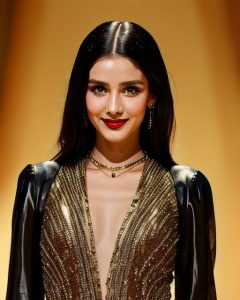
Albania has a strong emphasis on education, with high female participation in higher education across law, medicine, economics, engineering, and the humanities. The University of Tirana and Polytechnic University are the primary institutions, and a significant number of Albanians study abroad — Italy and Greece are the most common destinations, given language accessibility and geographic proximity — returning with international perspectives that shape expectations in both professional and personal life.
Albanian women who have built careers — increasingly the norm in urban areas — expect those careers to be respected rather than treated as a holding pattern until domestic life takes over. The shift from the traditional model of women as primarily domestic contributors is real and ongoing, particularly in Tirana and other cities, and a partner who engages with her professional ambitions as genuinely important rather than secondary makes a fundamentally better impression than one who approaches the relationship with more traditional assumptions about role distribution. At the same time, family remains a genuine priority rather than a cultural relic, and the combination of professional seriousness and family orientation is characteristic rather than contradictory.
What Albanian Women Are Like in Relationships and Practical Guidance
Albanian women tend to be direct, warm, and clear about what they expect — qualities that reflect Besa’s emphasis on honesty and the keeping of commitments. Social performance and flattery for its own sake tend to land poorly; genuine engagement with who she actually is, what she actually values, and what she actually comes from tends to land well. The warmth of Albanian hospitality — which extends into personal relationships — is real and generous once trust has been established, and the loyalty that follows from that trust is consistent with a culture that takes the fulfillment of commitments seriously as a moral matter.
Family will eventually be part of any serious relationship in ways that are meaningful rather than perfunctory. Meeting her parents, participating in family occasions, and demonstrating genuine respect for the family connections that matter to her are all steps that carry real weight in Albanian relationship culture. Getting this right — warmth, interest, respect — matters considerably more than getting it quickly, and patience with the pace at which trust develops tends to be rewarded.
If you spend time in Albania, engage with it genuinely. The country has been one of Europe’s best-kept travel secrets — the Accursed Mountains in the north, the Riviera coastline between Sarandë and Vlorë, the UNESCO old towns of Gjirokastër and Berat, the ancient ruins at Butrint — all of this is genuinely extraordinary and almost entirely uncrowded. Knowing something specific about Albanian history, about Skanderbeg, about what Besa actually means, about Ismail Kadare’s novels — these forms of engagement communicate that you see Albania as a real place with its own depth, which in a country accustomed to being overlooked, is exactly the right impression to make.