
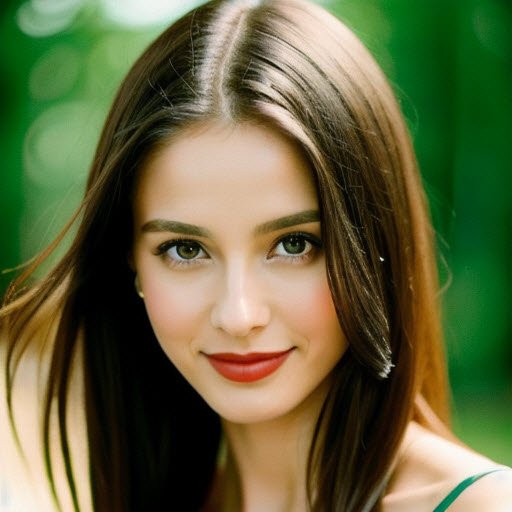
Slovenian Women
Slovenia is a small country that tends to surprise people who are not familiar with it. Wedged between Italy, Austria, Hungary, and Croatia, it has the Alps in the north, the Adriatic coast to the southwest, and dense forest covering much of the interior — all within a country roughly the size of New Jersey. The women who come from this environment tend to reflect it: they are outdoors-oriented, quietly self-sufficient, highly educated, and carry a cultural identity shaped by centuries at the intersection of Central European and Mediterranean influences. Understanding where a Slovenian woman comes from goes a long way toward understanding what she is actually like.
Geography, Cities, and Regional Character
Ljubljana, the capital, is a compact, architecturally beautiful city of around 300,000 people with a lively café culture, a strong arts scene, and a university that gives it a consistently young and intellectually engaged atmosphere. It regularly appears near the top of European quality-of-life rankings, and the women who grow up or study there tend to be internationally oriented, multilingual, and comfortable navigating both professional and social contexts with confidence.
Maribor, Slovenia’s second city in the northeast, has a more industrial character alongside wine country in the surrounding Styrian hills — it hosts one of the oldest grapevines in the world, still producing wine. Koper, on the short Adriatic coastline, carries a distinctly Italian influence from its centuries as part of the Venetian Republic. Celje, in the country’s interior, has a quieter, more traditionally Central European character. Women from smaller towns and rural areas tend to hold somewhat more traditional values around family and community than their counterparts in Ljubljana, though the differences are less pronounced than in larger countries.
The natural environment is genuinely central to Slovenian life in ways that are not just tourism marketing. Hiking, cycling, skiing, and water sports are ordinary weekend activities for a large part of the population, and this active outdoor orientation tends to carry through into how Slovenian women approach health, leisure, and what they look for in a partner.
Population, Language, and Education
Slovenia has a population of approximately 2.1 million people — a common error in articles about Slovenia is citing 21 million, which is ten times too high. The population is predominantly ethnically Slovenian, with small Italian and Hungarian minority communities in the border regions. Multilingualism is common, particularly among younger generations: English is widely spoken, and many Slovenians also have working knowledge of German, Italian, or Croatian depending on their region and education.
Slovenia has one of the highest literacy rates in Europe and strong female participation in higher education across all major fields. Slovenian women are well-represented in medicine, law, sciences, economics, and the arts, and many hold postgraduate qualifications. Education is taken seriously at every level of society, and intellectual engagement — the ability to sustain a real conversation across a range of topics — tends to matter considerably to Slovenian women in a relationship context.
History and Cultural Identity
Slovenia’s territory has passed through the hands of the Roman Empire, the Holy Roman Empire, the Habsburg Monarchy, and most recently the Yugoslav federation, from which it declared independence in 1991 after a ten-day war that was, by the standards of Yugoslav dissolution, mercifully brief. The Habsburg period in particular left deep cultural marks — the architecture of Ljubljana owes much to Vienna, and the Central European sense of civic culture and institutional order runs through Slovenian society in ways that distinguish it from its Balkan neighbours.
Slovenian cultural identity is built around language — Slovenian was preserved through centuries of Habsburg rule when it might easily have been absorbed by German — and around folk traditions that remain genuinely alive. Pust, the Slovenian carnival with its elaborate masked processions, is celebrated with real enthusiasm. The grape harvest in Styria and the Primorska wine regions is a major seasonal event. Traditional foods like potica, a rolled pastry filled with walnuts, poppy seeds, or other fillings, and žganci, a buckwheat porridge, appear at family tables especially around holidays. Showing genuine interest in these specific traditions — not just vague enthusiasm for “Slovenian culture” — tends to register as authentic engagement rather than performance.
The country’s religious tradition is predominantly Roman Catholic, though practice varies considerably by generation and region, with younger urban Slovenians generally more secular than older rural populations. Religious identity shapes certain cultural rhythms — holiday celebrations, family rituals — without necessarily translating into conservative social attitudes, particularly in cities.
The Economy and What It Means for Relationships
Slovenia is an EU and NATO member state with one of the highest standards of living among former Yugoslav and Eastern Bloc countries. Its economy is diverse across manufacturing, services, technology, and tourism, and it has managed the transition from a planned to a market economy more smoothly than most of its regional neighbours. This relative stability shapes the expectations Slovenian women bring to relationships in practical ways: financial security matters, but as a reflection of seriousness and reliability rather than as a transactional requirement. A partner who is professionally grounded and economically responsible is more attractive than one who is merely wealthy without those underlying qualities.
Slovenian women are generally economically independent and expect that independence to be respected rather than managed. A relationship dynamic where her career and financial autonomy are treated as secondary to her partner’s tends not to work well. Equal partnership — genuinely mutual rather than nominally so — is the expectation rather than the aspiration.
What Slovenian Women Are Like in Relationships
Slovenian women tend to be direct, self-possessed, and slow to extend trust to people they do not know well — not out of coldness but out of a cultural norm that treats reserve as appropriate in early acquaintance. The transition from polite distance to genuine warmth is real and worth the patience it requires. Once a Slovenian woman decides that someone is worth her trust, that commitment tends to be consistent and lasting.
Family connections are important throughout Slovenian society, and a serious relationship will eventually involve her family in ways that go beyond a polite introduction. Respect for her family relationships — interest in them rather than tolerance of them — matters. Slovenian women generally look for partners who share their orientation toward building something long-term rather than those who treat the future as permanently undefined.
Loyalty and honesty are genuinely non-negotiable values rather than just stated preferences. Slovenian women tend to communicate directly about what they want and what they do not want, and they expect the same directness in return. A partner who is straightforward about his intentions, consistent in his behavior over time, and willing to engage seriously with her life — her work, her interests, her cultural background — is making exactly the right kind of impression.
Practical Guidance for Western Men Dating Slovenian Women

A few things that actually matter in practice. Slovenia is a small country that many Western men know very little about, and making the effort to learn something real about it — its geography, its history, its culture, what makes it distinct from its neighbours — communicates genuine interest in a way that generic compliments never do. Slovenian women are aware that their country is often overlooked or confused with Slovakia, and a partner who can demonstrate that he sees the difference makes a different impression from the start.
The outdoor orientation of Slovenian culture is worth taking seriously as a dating context rather than just a background detail. An invitation to hike in Triglav National Park, visit Lake Bled, or spend a weekend in the Julian Alps is not just logistics — it is an invitation into the part of Slovenian life that matters most to many people there. Engaging with that enthusiastically, rather than treating it as an obstacle to more conventional date formats, tends to go over well.
Be patient with the early reserve that is normal in Slovenian social culture. Do not mistake it for disinterest or try to accelerate past it through intensity or grand gestures — neither approach works well. Consistent, genuine engagement over time is what actually builds the kind of trust that Slovenian women extend seriously and, once extended, maintain for the long term.